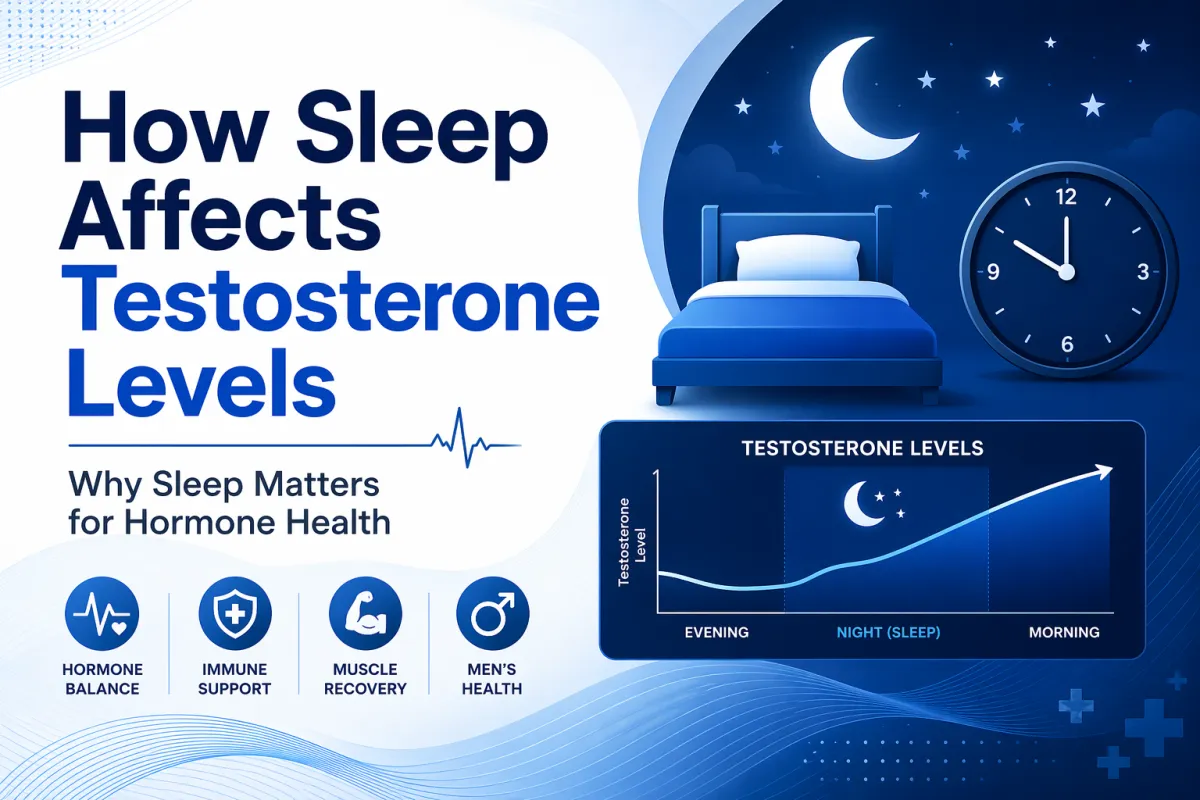
How Sleep Affects Testosterone Levels (What You Need to Know)
How Sleep Affects Testosterone Levels (And Why It Matters)
Sleep isn’t just about rest, it’s one of the most important factors for healthy testosterone levels.
👉 In fact, poor sleep can significantly lower your testosterone.
The Connection Between Sleep and Testosterone
Your body produces most of its testosterone while you sleep.
👉 Especially during:
Deep sleep stages
Early morning hours
If your sleep is disrupted, testosterone production drops.
What Happens When You Don’t Sleep Enough
Even short-term sleep deprivation can:
Lower testosterone levels
Reduce energy and focus
Decrease motivation
Impact mood
👉 Studies show that just a few nights of poor sleep can cause noticeable declines.
How Much Sleep Do You Actually Need?
For optimal testosterone levels:
👉 Aim for 7–9 hours per night
Less than that consistently can negatively affect hormone production.
Signs Your Sleep Is Hurting Your Testosterone
You may notice:
Waking up tired
Low energy throughout the day
Reduced sex drive
Poor recovery from workouts
Brain fog
👉 These often overlap with low testosterone symptoms.
Sleep Quality Matters Too
It’s not just about hours, quality is key.
Poor sleep quality includes:
Frequent waking
Shallow sleep
Irregular sleep schedule
👉 Even if you sleep long enough, poor quality can still affect hormones.
How to Improve Sleep for Better Testosterone
1. Stick to a Schedule
Go to bed and wake up at the same time daily.
2. Reduce Screen Time at Night
Limit phone and TV use before bed.
3. Create a Sleep-Friendly Environment
Dark room
Cool temperature
Quiet setting
4. Avoid Stimulants Late in the Day
Reduce caffeine and heavy meals at night.
The Compounding Effect
Poor sleep doesn’t just lower testosterone, it also:
Increases stress (cortisol)
Reduces recovery
Impacts overall health
👉 This creates a cycle that keeps testosterone low.
Why You Still Need to Test
Even if you improve your sleep:
👉 You won’t know your testosterone levels without testing
Sleep is a major factor, but not the only one.
Simple Next Step
If your sleep isn’t optimal:
Start improving it tonight
Aim for consistent, quality rest
Pair it with a morning testosterone test (7–10 AM) to track results
