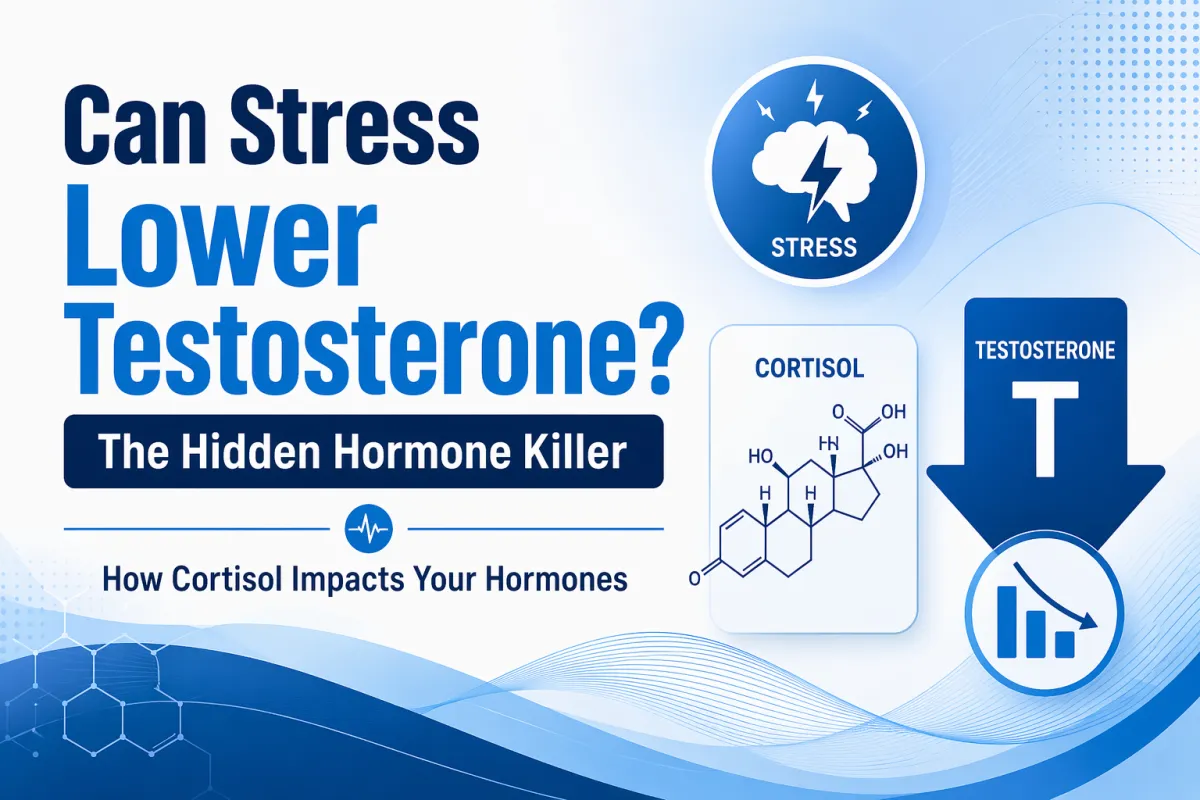
Can Stress Lower Testosterone? The Hidden Hormone Killer
Can Stress Lower Testosterone? The Hidden Hormone Killer
Stress isn’t just mental — it directly affects your hormones.
👉 And one of the biggest targets is your testosterone.
The Link Between Stress and Testosterone
When you’re stressed, your body produces cortisol — the primary stress hormone.
Here’s the problem:
👉 Cortisol and testosterone work against each other
High cortisol = Lower testosterone
Chronic stress = Long-term hormone imbalance
What Happens During Chronic Stress
Short-term stress is normal.
But chronic stress (ongoing pressure) can:
Suppress testosterone production
Reduce energy levels
Affect mood and motivation
Disrupt sleep
Over time, this creates a cycle that’s hard to break.
Signs Stress Is Affecting Your Testosterone
You might notice:
Constant fatigue
Low motivation
Decreased sex drive
Poor focus
Trouble sleeping
👉 These often overlap with low testosterone symptoms.
The Cortisol Problem
When cortisol stays elevated:
Your body prioritizes survival, not performance
Hormone production shifts
Testosterone levels drop
👉 This is why managing stress is critical for hormone health.
How to Reduce Stress and Protect Testosterone
Here are practical ways to lower stress:
1. Improve Sleep
Aim for 7–9 hours
Keep a consistent schedule
2. Exercise Smart
Strength training helps
Avoid overtraining (which increases cortisol)
3. Manage Daily Stress
Deep breathing
Short breaks during work
Time away from screens
4. Eat Properly
Balanced meals
Avoid excessive sugar and processed foods
Why Stress Management Alone Isn’t Enough
Even if you reduce stress:
👉 You won’t know your testosterone levels without testing
Stress is just one piece of the puzzle.
The Only Way to Confirm the Impact
Testing helps you:
See if stress is affecting your hormones
Measure how severe the impact is
Track improvement over time
Simple Next Step
If you’re dealing with ongoing stress:
Start managing it daily
Combine it with a morning testosterone test (7–10 AM)
Use real data to understand your hormone health
