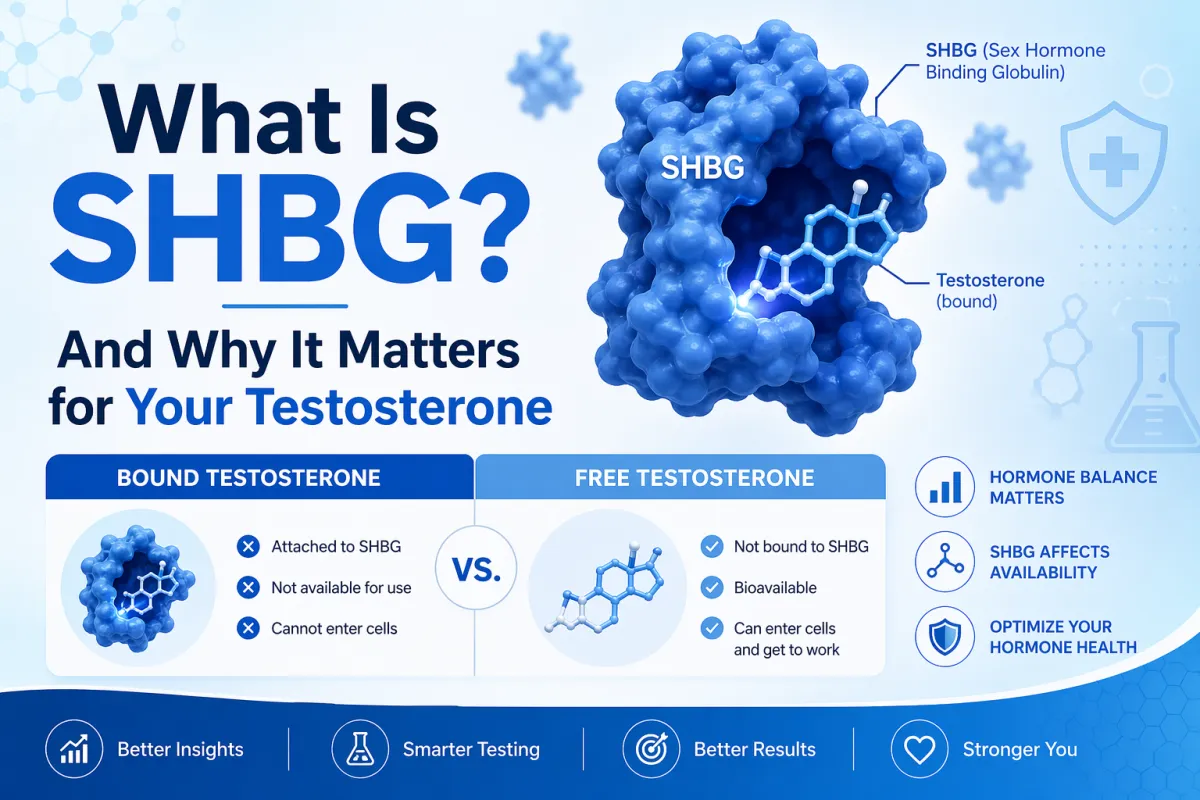
What Is SHBG? How It Affects Your Testosterone Levels
What Is SHBG? And Why It Matters for Your Testosterone
When people talk about testosterone, they usually focus on one number.
But there’s a hidden factor that can completely change how your results are interpreted:
SHBG (Sex Hormone Binding Globulin)
What Is SHBG?
SHBG is a protein made by your liver.
Its job is simple:
It binds to testosterone in your bloodstream.
Once testosterone is bound to SHBG:
It becomes inactive
Your body can’t use it
Why SHBG Matters
You might have normal total testosterone but still feel symptoms.
Why?
Because SHBG may be “locking away” your testosterone.
Free vs Bound Testosterone
Your testosterone exists in two main forms:
Bound Testosterone → Attached to SHBG (inactive)
Free Testosterone → Available for your body to use (active)
Free testosterone is what actually drives:
Energy
Muscle growth
Libido
Mental clarity
What Happens If SHBG Is Too High?
High SHBG means:
Less free testosterone
More symptoms — even with “normal” total levels
You might experience:
Fatigue
Low sex drive
Brain fog
Reduced performance
What Happens If SHBG Is Too Low?
Low SHBG can:
Increase free testosterone temporarily
Sometimes signal metabolic or hormonal issues
Balance is key — not just high or low.
What Affects SHBG Levels?
Several factors can influence SHBG:
Age
Diet
Body fat levels
Liver health
Hormonal balance
This is why two people can have very different results.
Why SHBG Is Often Overlooked
Many basic tests only measure:
Total testosterone
Without SHBG, you’re missing half the picture.
The Smarter Way to Test
For accurate insight, your test should include:
Total testosterone
Free testosterone
SHBG
This gives you a complete hormone profile
Common Scenario
You might have:
Normal total testosterone
High SHBG
Low free testosterone
And still feel all the symptoms.
Simple Next Step
Don’t rely on incomplete data.
Choose a test that includes SHBG + free testosterone
Test in the morning (7–10 AM)
Use your results to make informed decisions
